Cinematic AI · Spiritual desert
Dust of GOD.
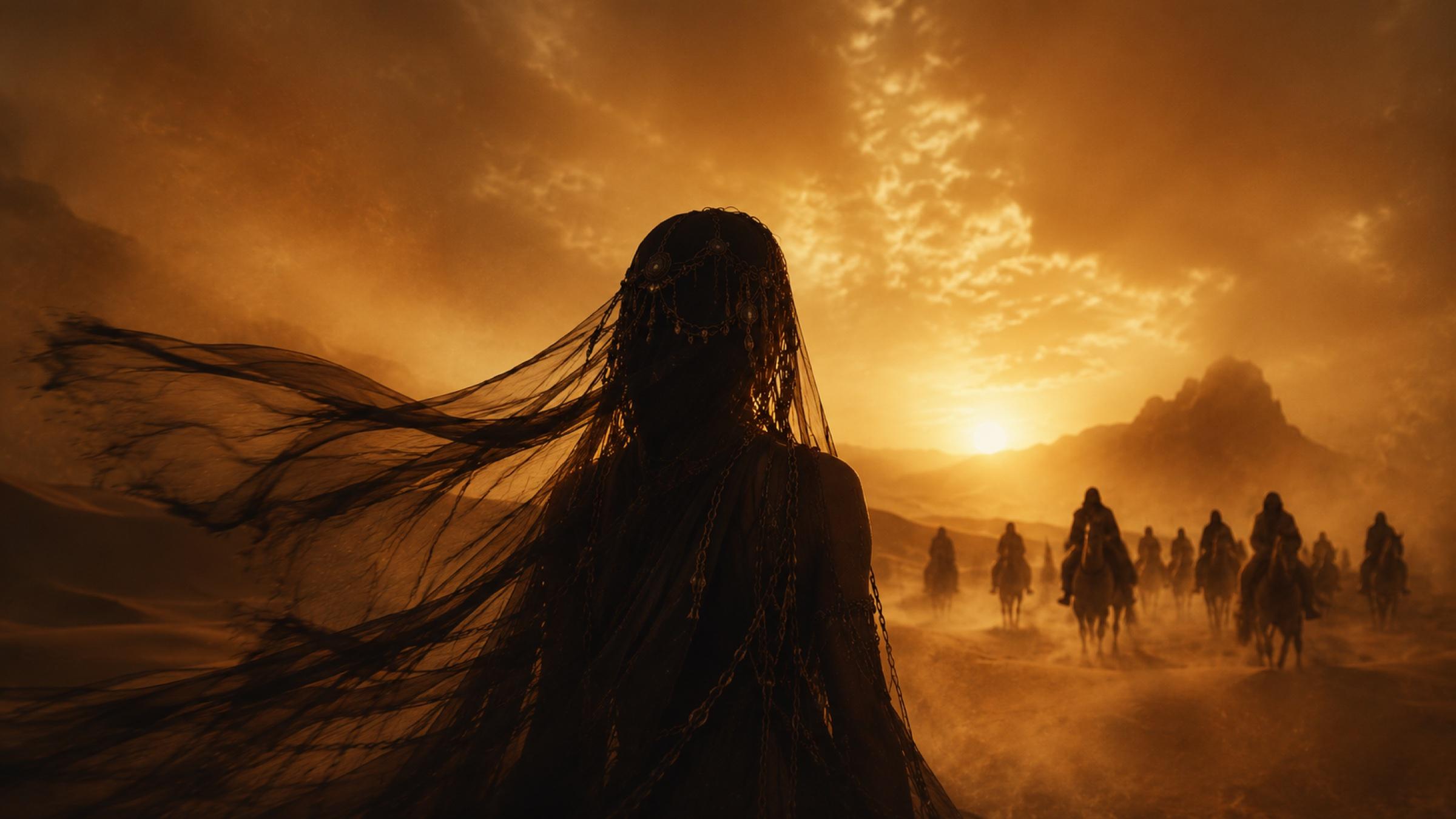
AI cinematic short — the desert as a living spiritual entity, born from No Church In The Wild.
The pitch
04 chaptersBorn from a simple moment: hearing No Church In The Wild again one morning, instantly seeing a whole world. Not a music video, not a sequence of AI visuals — a complete cinematic vision waiting to be built.
The core idea: the desert as a living spiritual entity. A sensory film where the human disappears, but the dust remains. Belief, solitude, power, instinct, spirituality, survival — six themes running through every shot.
Ironically, the limitations are what made the film stronger.
Visual direction: Dune (Villeneuve), Lawrence of Arabia, cinematic desert photography, mythological worldbuilding. Burnt orange, amber, bronze, atmospheric haze, volumetric light. The goal wasn't just realism — it was to make you feel the heat, the dust, the silence and the scale of the environment.
One day, 30€. The constraints completely transformed the process. I started generating 15-second shots. Mid-production I pivoted to 4-5 seconds — better pacing, stronger consistency, more control, faster iteration. Ironically, the limitations are what made the film stronger.
The stack
Storytelling & prompting
Video generation
Editing & sound design
Behind the scenes
04 stepsAI filmmaking ≠ generating beautiful images.
AI filmmaking isn't about generating images. It's about directing emotion, controlling atmosphere, creating continuity, building visual rhythm, and understanding cinematic restraint.
Every shot built through cinematic prompting, visual continuity control, reference-frame chaining, atmosphere matching, motion consistency. Particular attention to dust behavior, fabric simulation, realistic skin textures, natural light diffusion.
Seedance 2.0 used exclusively across the whole film to preserve visual consistency, atmospheric continuity and a unified texture language. CapCut for pacing, transitions and rhythmic sync to the music.
The project became an exploration of AI not as a generation tool — but as a medium for cinematic storytelling.